
Jul 2026
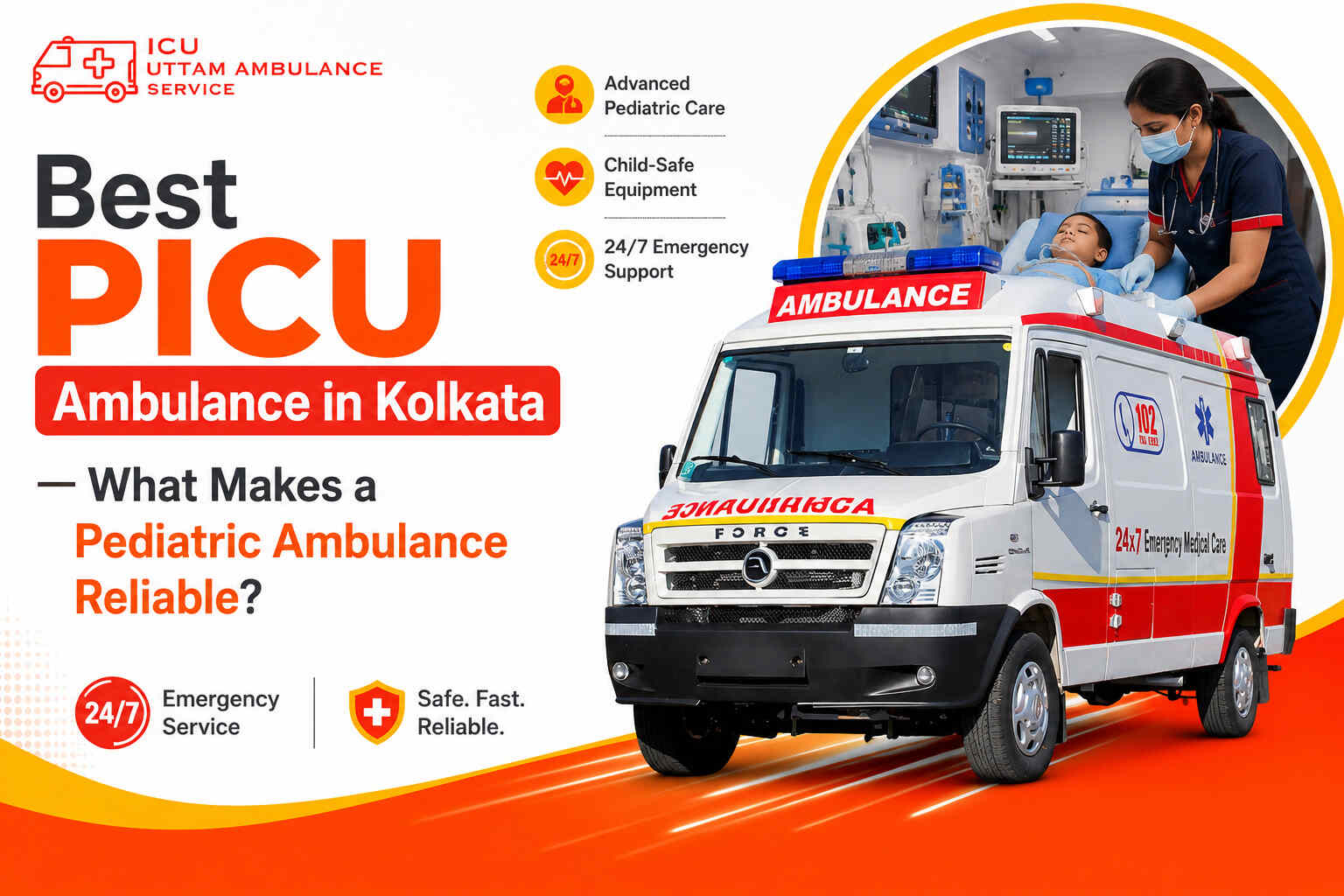
When a child faces a serious illness or injury, getting immediate medical support becomes the top priority. However, when a critically ill child needs to be transferred between hospitals, from home to the ICU, or for specialized treatment, a regular ambulance may not provide the required level of care. A PICU ambulance in Kolkata offers advanced pediatric emergency transport with continuous monitoring, specialized medical equipment, and trained healthcare professionals experienced in handling critical child patients.
Pediatric emergencies require specialized attention because children respond differently to illness, trauma, and medication compared to adults. Their smaller airways, changing vital signs, and unique medical needs make safe transportation more complex. Choosing the right pediatric ambulance service in Kolkata is not only a transportation decision but an important medical decision.
For parents and caregivers, arranging emergency child transportation can be stressful due to concerns about safety, medical support, and the overall transfer process. This guide explains what a PICU ambulance is, why pediatric critical care transport is important, what makes an ambulance service reliable, and the key factors to consider before booking.
A PICU ambulance is more than a vehicle — it functions as a mobile critical care unit equipped to support children who require continuous monitoring and emergency medical assistance during transfer. Understanding its features can help families make a safer and more informed choice during critical situations.
What Is a PICU Ambulance?
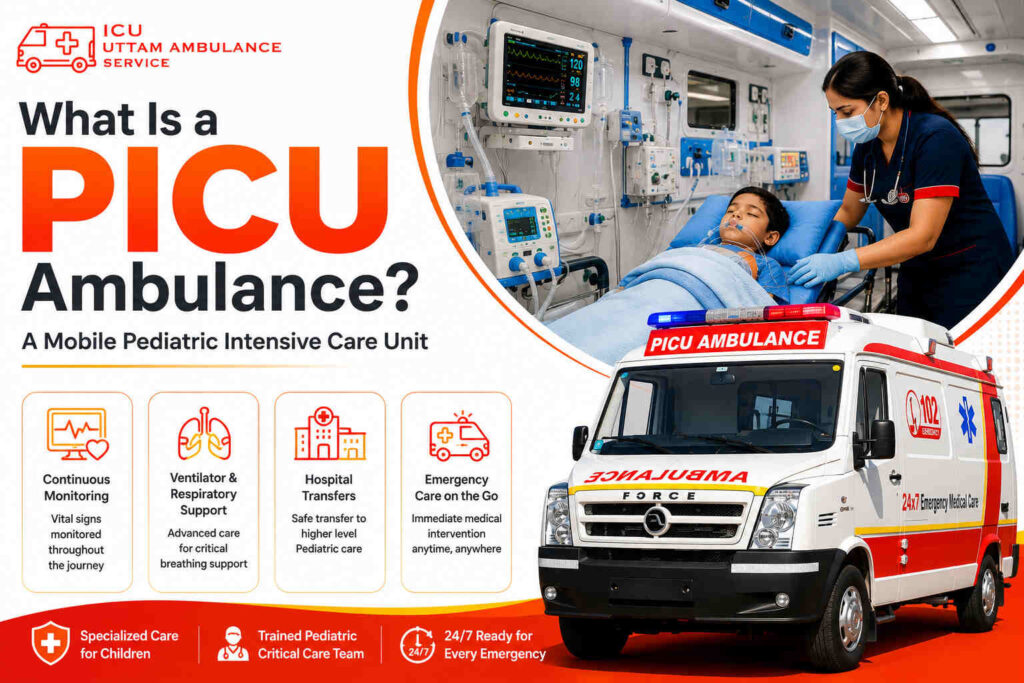
PICU stands for Pediatric Intensive Care Unit. A PICU ambulance, then, is essentially a mobile extension of that unit — a specially equipped ambulance built to safely transport children who require intensive, continuous medical care during the journey.
Unlike a standard ambulance, which is generally equipped to handle general emergencies and basic first aid, a PICU ambulance is designed around the specific needs of critically ill children. This includes children who:
- Need continuous monitoring of vital signs like heart rate, oxygen saturation, and blood pressure
- Require ventilator or respiratory support
- Are being transferred between hospitals for a higher level of critical care
- Need emergency medical intervention that can’t wait until they reach the hospital
The key difference between a regular ambulance and a PICU ambulance comes down to two things: equipment and expertise. A regular ambulance can move a patient from point A to point B safely for non critical situations. A PICU ambulance is built to sustain intensive care itself, on the move — meaning the level of monitoring and support a child receives doesn’t pause just because they’re in transit.
Pediatric patients also require a different approach to care simply because of their age and physiology. Dosages, equipment sizing, and even the way vital signs are interpreted differ significantly between children and adults. A PICU ambulance and its team are equipped to handle these differences correctly, which is something a general ambulance setup usually isn’t designed for.
Why Do Children Need a Specialized PICU Ambulance?
Not every child who needs to go to the hospital needs a PICU ambulance. But there are specific situations where this level of specialized transport becomes medically necessary rather than optional.
Some common situations where a PICU ambulance may be required include:
- Critical illness — conditions like severe sepsis, organ dysfunction, or other life threatening illnesses that require constant medical supervision
- Breathing difficulties — children experiencing respiratory distress who need oxygen support or airway management during the move
- Ventilator dependency — children who are already on a ventilator and need to be moved without any interruption in respiratory support
- Serious infections — cases where a child’s condition could deteriorate quickly and needs to be watched closely en route
- Trauma cases — accidents or injuries where internal monitoring and rapid intervention capability are essential
- Hospital to hospital ICU transfers — when a child needs to be moved to a facility with more specialized pediatric critical care resources
In each of these situations, the goal of a PICU ambulance is the same: to make sure that the level of care a child is receiving in the hospital doesn’t drop, even for the duration of the journey. It’s less about the distance being covered and more about the continuity of critical care throughout that distance.
What Makes a PICU Ambulance Reliable?
This is really the core question every parent or caregiver should be asking before booking a service. A PICU ambulance can only be called “reliable” when several things come together correctly — the equipment, the people operating it, the monitoring process, and the ability to respond to the unexpected. Let’s break each of these down.
Advanced Medical Equipment and Monitoring Systems
The equipment on board a PICU ambulance isn’t just a checklist — each piece plays a specific role in keeping a child stable during transport.
- Ventilator support — for children who cannot breathe adequately on their own, a transport ventilator maintains consistent respiratory support throughout the journey, matching the settings used in the hospital ICU.
- Oxygen systems — portable oxygen delivery ensures oxygen levels remain stable, which is especially critical for children with respiratory or cardiac conditions.
- Cardiac monitors — continuous ECG monitoring tracks heart rhythm and rate, allowing the medical team to catch any irregularities immediately.
- Pulse oximeter — this tracks blood oxygen saturation in real time, giving the team an early warning if a child’s oxygen levels start to drop.
- Infusion pumps — used to deliver fluids or medication at a precise, controlled rate, which is especially important for children where dosage accuracy matters more than in adults.
- Emergency medication support — pediatric specific emergency medications on board mean the team can respond immediately if the child’s condition changes, without waiting to reach the hospital.
Each of these tools exists to answer one question during transport: is the child stable right now, and if not, what needs to happen immediately? Without this equipment, that question often can’t be answered in time.
Trained Medical Team and Pediatric Care Experience
Equipment alone doesn’t save lives — the people using it do. A PICU ambulance is only as reliable as the medical professionals on board.
- Trained paramedics who understand pediatric emergency protocols, not just general emergency response
- Emergency medical professionals experienced in recognizing early signs of a child’s condition worsening
- Hands on experience with pediatric patients, including how to communicate with frightened children and anxious parents while still working efficiently
A skilled team knows how to read subtle changes in a child’s condition that equipment alone might not immediately flag. This combination of trained eyes and reliable machines is what actually keeps a child safe during transport — one without the other leaves gaps.
Continuous Monitoring During Transportation
One of the biggest misconceptions about ambulance transport is that monitoring is only necessary until the patient is loaded in — after that, it’s just a drive to the hospital. For a critically ill child, that assumption can be dangerous.
A reliable PICU ambulance maintains continuous monitoring of:
- Vital signs throughout the entire journey, not just at pickup and drop off
- Oxygen levels, since even brief drops can affect a child’s condition
- Heart rate and rhythm, to catch any sudden changes early
- Overall patient stability, adjusting care in real time if something shifts
This continuous approach means the ambulance isn’t just “moving” the child — it’s actively caring for them the entire way, exactly as they would be cared for inside a hospital ward.
Proper Emergency Response Capability
Even with the best planning, a child’s condition can change unexpectedly during transport. A reliable PICU ambulance service is prepared for exactly this.
This includes being ready for:
- Sudden changes in the child’s condition, with the team trained to respond immediately rather than wait until arrival
- On the spot medical intervention when needed, using the equipment and medication already on board
- Ongoing communication with the receiving hospital’s team, so doctors are aware of the child’s status before they even arrive
This preparedness is what separates a transport service from a true critical care transport service.
PICU Ambulance vs Normal Ambulance — What Is the Difference?
Here’s a simple side by side look at how a PICU ambulance compares to a standard ambulance:
| Factor | Normal Ambulance | PICU Ambulance |
| Patient Type | General emergency cases | Critically ill children |
| Monitoring | Basic | Advanced, continuous |
| Equipment | Limited | ICU level equipment |
| Medical Support | Basic emergency care | Critical care support |
| Team Training | General emergency response | Pediatric critical care trained |
The core takeaway: a normal ambulance is built for transport, while a PICU ambulance is built to sustain intensive care during transport. For a critically ill child, that distinction can matter a great deal.
PICU Ambulance vs ICU Ambulance vs NICU Ambulance
These three terms are often used interchangeably, but each serves a different patient group. Understanding the difference helps ensure the right service is booked for the right situation.
- PICU Ambulance — designed for critically ill children, generally beyond infancy through adolescence, who require intensive monitoring and care during transport.
- ICU Ambulance — designed for adult critical care patients who need continuous monitoring, ventilator support, or advanced life support during transfer.
- NICU Ambulance — designed specifically for newborns and premature babies, with specialized incubators and equipment sized and calibrated for very small patients.
Booking the correctly specialized ambulance matters because the equipment, training, and even the physical setup inside each of these vehicles is tailored to a specific patient group.
When Should You Consider Booking a PICU Ambulance in Kolkata?
There are a few clear scenarios where booking a PICU ambulance makes sense:
- Your child’s doctor has specifically recommended critical care transport
- Your child is being transferred to or from an ICU
- Your child is ventilator dependent and needs to be moved
- Your child requires continuous monitoring that can’t be paused during a routine ambulance ride
- Your child needs to be transferred over a longer distance where medical support throughout the journey is essential
If any of these apply, it’s worth reaching out to a provider directly to discuss your child’s specific situation rather than assuming a standard ambulance will be sufficient.
How to Choose the Best PICU Ambulance in Kolkata?
Choosing the right service under pressure is difficult, which is why it helps to know what to check for in advance. Here’s a practical checklist.
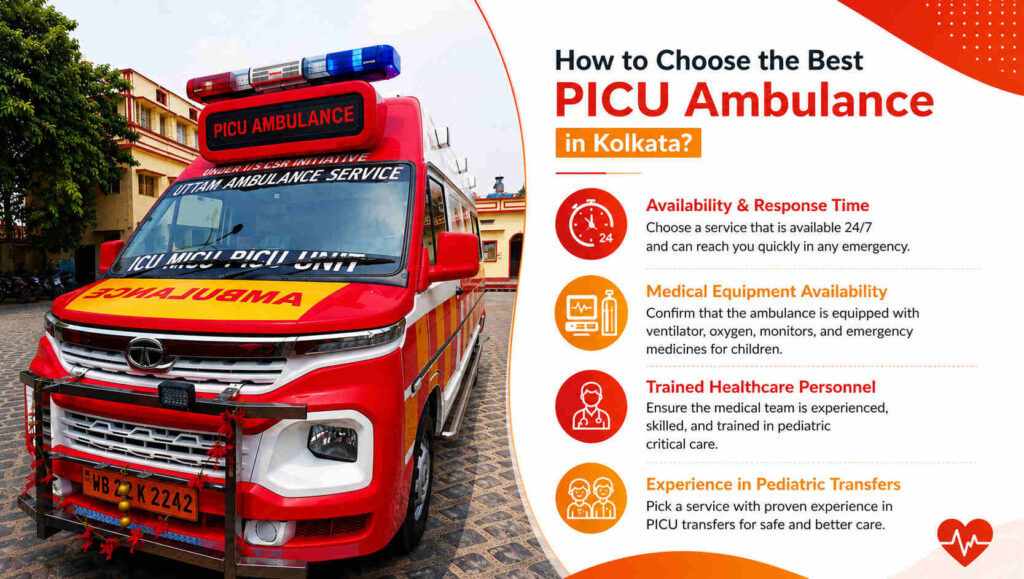
Availability and Response Time
In a pediatric emergency, minutes matter. Ask how quickly the ambulance can reach your location and whether the service operates 24/7. A provider that can respond quickly, any time of day or night, reduces the time your child spends waiting for the care they need.
Medical Equipment Availability
Before booking, confirm the ambulance is actually equipped with:
- Ventilator
- Oxygen support
- Monitoring devices (cardiac monitor, pulse oximeter)
- Emergency medicines suited for pediatric use
Don’t assume — ask directly, especially if your child has a specific medical need like ventilator dependency.
Trained Healthcare Personnel
It’s reasonable to ask questions like:
- Does the medical team have specific experience with pediatric patients?
- Who will be accompanying my child during transport?
- What is their training background in emergency or critical care?
A trustworthy provider will answer these questions clearly and without hesitation.
Experience in Pediatric Transfers
General ambulance experience isn’t the same as pediatric transfer experience. Ask how often the provider handles PICU transfers specifically. Experience with children — their unique needs, their smaller margins for error, and how to keep them calm — makes a real difference in the quality of care during transport.
What Factors Affect PICU Ambulance Cost in Kolkata?
It’s natural to want to know costs upfront, but PICU ambulance pricing isn’t usually a single fixed number — it depends on several factors specific to each situation:
- Distance travelled — longer transfers, especially between cities or distant hospitals, naturally involve higher costs
- Medical equipment required — a transfer requiring ventilator support and advanced monitoring involves more equipment usage than a simpler transfer
- Duration of the transfer — longer transport times may require additional medical supplies and staff time
- Medical support needed — the number and type of medical professionals required on board affects overall cost
- Level of critical care — more intensive interventions during transport naturally come with a different cost structure than basic monitoring
Rather than looking for the cheapest option, it helps to think about cost alongside safety, equipment, and expertise. A lower price that comes with under equipped transport or an inexperienced team isn’t a saving — it’s a risk. It’s best to speak directly with the provider about your child’s specific medical needs to get an accurate understanding of what the transfer will involve.
How Does Hospital to Hospital PICU Transfer Work?
Understanding the process in advance can make a stressful situation feel a little more manageable. Here’s generally how a hospital to hospital PICU transfer works:
Step 1: Doctor evaluates transport requirement The treating doctor assesses whether the child needs to be moved to another facility and determines the level of medical support required during transport.
Step 2: Appropriate ambulance arranged Based on the doctor’s assessment, a PICU ambulance with the right equipment and staffing is arranged and dispatched.
Step 3: Medical team prepares equipment Before departure, the medical team checks and prepares all necessary equipment — ventilators, monitors, medications — based on the child’s specific condition.
Step 4: Child monitored during journey Throughout the transfer, the team continuously monitors the child’s vital signs and is prepared to intervene immediately if anything changes.
Step 5: Handover at receiving hospital On arrival, the transport team hands over the child to the receiving hospital’s medical staff, along with a full update on the child’s condition and any care provided during transit, ensuring continuity of treatment.
This structured process is designed to make sure nothing gets missed between the point of departure and the point of arrival.
Why Choose Uttam Ambulance for PICU Ambulance Service in Kolkata?
When your child needs critical care transport, you want a provider that takes the responsibility seriously — not just as a transport service, but as an extension of medical care.
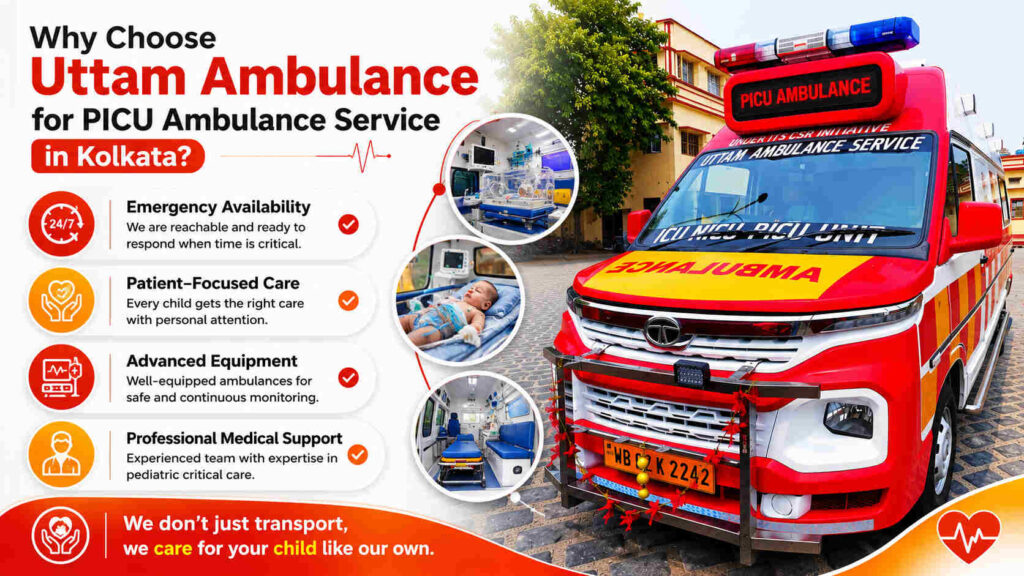
At Uttam Ambulance, our approach to pediatric transport is built around a few core priorities:
- Emergency availability — our team is reachable and ready to respond when time is critical
- Patient focused care — every transfer is approached with attention to the child’s specific medical condition, not a one size fits all process
- Equipment readiness — our ambulances are maintained and equipped to support continuous monitoring and critical care needs during transport
- Professional support — our medical staff bring experience in handling pediatric emergencies with the calm and care that anxious families need in the moment
We understand that when a family calls for a PICU ambulance, they’re not just booking a vehicle — they’re trusting us with one of the most important journeys of their child’s care. That’s a responsibility we take seriously in how we prepare, equip, and staff every transfer.
Areas Covered for PICU Ambulance Service in Kolkata
Uttam Ambulance provides PICU ambulance services across Kolkata and surrounding areas, including hospital to hospital transfer coverage across the city’s major medical facilities. Whether your child needs to be moved within Kolkata or transferred from a nearby location to a hospital in the city, our team is equipped to support that journey.
For families outside central Kolkata, it’s best to confirm coverage for your specific location directly with our team, as service availability can vary depending on distance and hospital destination.
Frequently Asked Questions About PICU Ambulance in Kolkata
- What is a PICU ambulance?
A PICU ambulance is a specially equipped ambulance designed to transport critically ill children who require continuous monitoring and intensive medical support during transit, essentially functioning as a mobile Pediatric Intensive Care Unit.
- When does a child need a PICU ambulance?
A child may need a PICU ambulance in situations involving critical illness, breathing difficulties, ventilator dependency, serious infections, trauma, or when being transferred between hospitals for a higher level of critical care.
- What equipment is available in a PICU ambulance?
A PICU ambulance is typically equipped with a ventilator, oxygen support systems, cardiac monitors, a pulse oximeter, infusion pumps, and emergency medications suited for pediatric patients.
- How much does a PICU ambulance cost in Kolkata?
Cost depends on factors like distance travelled, the equipment and medical support required, duration of transport, and the level of critical care needed. It’s best to discuss your child’s specific situation with the provider for an accurate estimate.
- Does a PICU ambulance provide ventilator support?
Yes, PICU ambulances are equipped with transport ventilators for children who require respiratory support during the journey, ensuring continuity of care from the sending to the receiving facility.
- What is the difference between PICU and ICU ambulance?
A PICU ambulance is designed specifically for critically ill children, while an ICU ambulance is designed for adult critical care patients. The equipment sizing, medication dosing, and staff training differ between the two.
- Can a PICU ambulance be used for hospital transfer?
Yes, PICU ambulances are commonly used for hospital to hospital transfers when a child needs to be moved to a facility with more specialized pediatric critical care resources, or when continuous monitoring is required during the move.
- How can I book a PICU ambulance in Kolkata?
You can book a PICU ambulance by contacting the provider directly, ideally with details about your child’s medical condition so the right equipment and medical team can be arranged in advance.
Final Thoughts — Choosing a Reliable PICU Ambulance in Kolkata
When a child requires critical medical transport, every second matters, and choosing a specialized pediatric transport service can make a vital difference in ensuring safe and continuous care. A dedicated PICU ambulance in Kolkata is designed to meet the unique medical needs of children by combining advanced life support equipment, child friendly emergency facilities, and a trained pediatric critical care team that understands the importance of maintaining stability during transportation. From monitoring critical conditions to providing uninterrupted medical support throughout the journey, specialized pediatric ambulance services help bridge the gap between hospital care and emergency transportation. For families, the priority should always be safety, reliability, and quality of care rather than focusing only on cost. Before arranging pediatric critical care transport, it is important to consider factors such as ambulance equipment, medical staff expertise, response time, and experience in handling pediatric emergencies. If your child needs trusted PICU ambulance services or pediatric critical care transport in Kolkata, Uttam Ambulance is ready to provide professional support with the right resources and compassionate care when it matters most.



Leave a Reply