
Jun 2026
Let me ask you something — have you ever been in a situation where someone you love suddenly collapsed, and you just… froze? You didn’t know whether to call a regular cab, a basic ambulance, or something more serious? You’re not alone. Millions of families across India face this exact panic every single day.
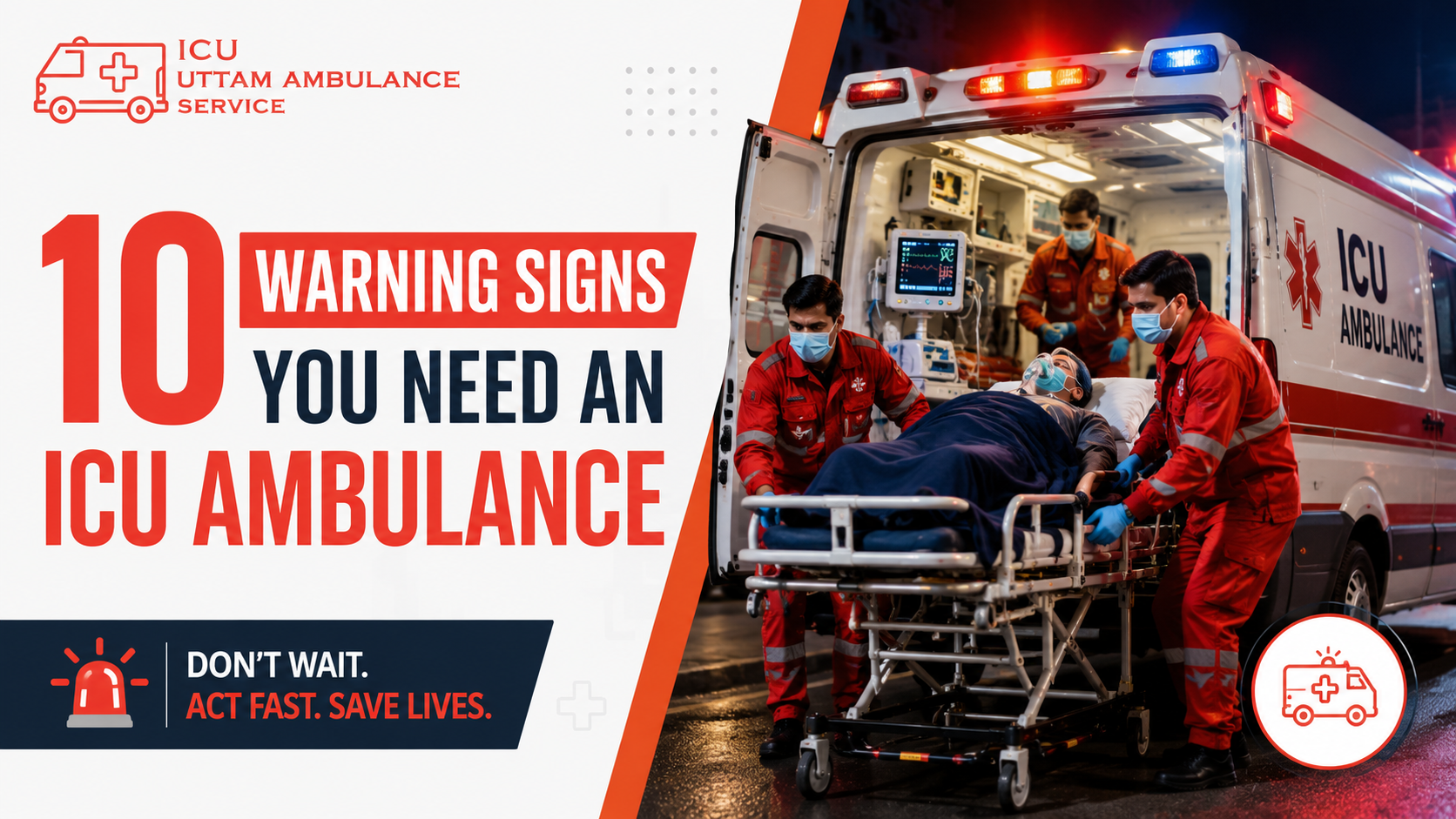
Here’s the hard truth: calling the wrong type of ambulance can cost precious minutes — and in critical cases, it can cost a life. An ICU ambulance is not just a fancy vehicle. It is a mobile intensive care unit, packed with life-saving equipment and staffed by trained medical professionals who begin treatment the moment they arrive at your door.
So how do you know when to call an ICU ambulance? I’ve put together 10 crystal-clear warning signs that should make your decision easy — and fast.
What Is an ICU Ambulance?
An ICU ambulance is a specialized emergency vehicle equipped with advanced life-support systems and trained medical personnel. Unlike a standard ambulance, it can provide continuous critical care during transportation, including oxygen therapy, cardiac monitoring, ventilator support, medication administration, and emergency interventions.
ICU ambulances are commonly used for heart attack patients, stroke victims, severe trauma cases, ventilator-dependent patients, newborn emergencies, and inter-hospital transfers requiring intensive medical supervision.
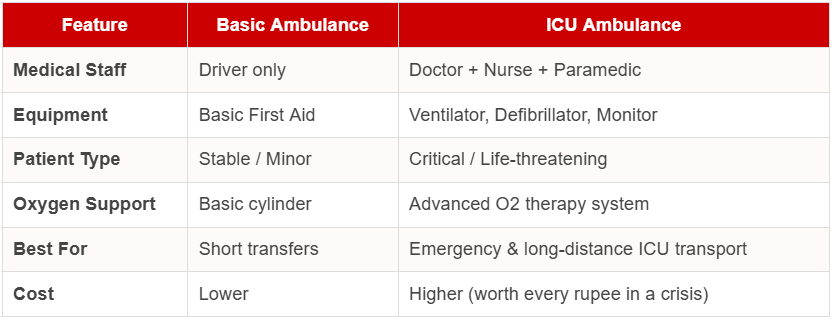
ICU Ambulance vs. Basic Ambulance
A basic ambulance is suitable for stable patients, whereas an ICU ambulance provides advanced life-support and continuous monitoring for critical cases.
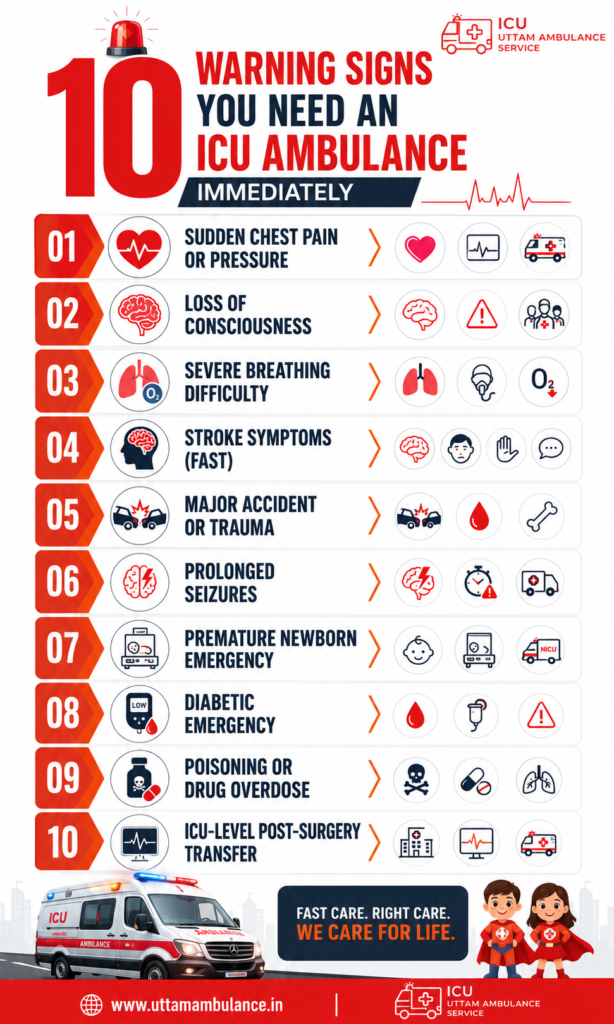
10 Warning Signs You Need an ICU Ambulance
Let’s get into it. These are the signs you cannot afford to ignore.
Sign 1: Sudden Chest Pain or Pressure
If someone clutches their chest, sweats profusely, and says “it feels like something is sitting on my chest” — that is a heart attack until proven otherwise. Do NOT wait. Do NOT drive them yourself. A cardiac patient needs continuous monitoring, oxygen, and immediate intervention the moment help arrives. An ICU ambulance gives them that.
Sign 2: Loss of Consciousness or Unresponsiveness
They are not asleep. They are not “just tired.” If a person suddenly becomes unresponsive, cannot be woken up, or collapses — this is a neurological or cardiac emergency. ICU-level care needs to begin within minutes, not after you park the car at the hospital gate.
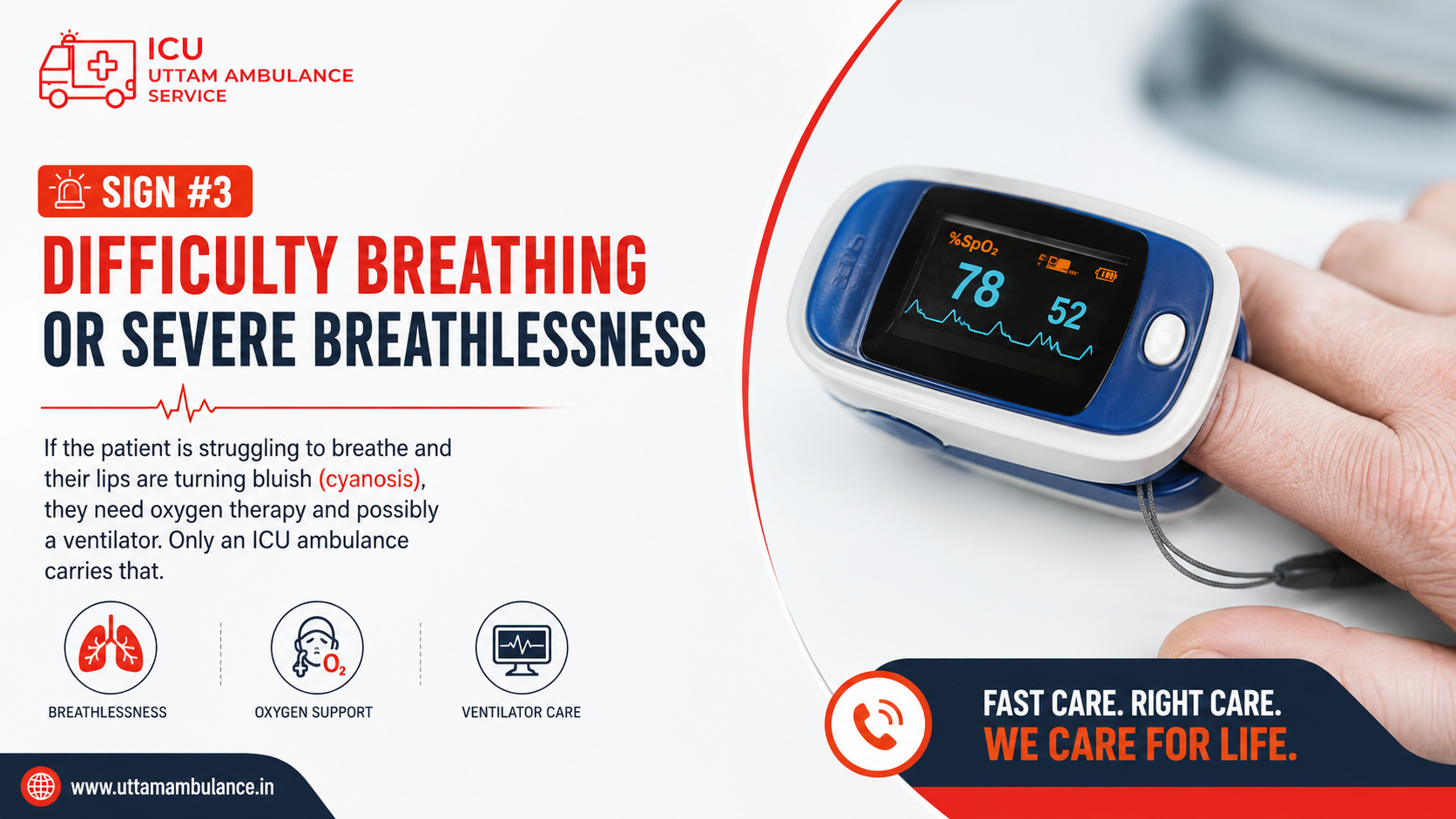
Sign 3: Difficulty Breathing or Severe Breathlessness
Watching someone gasp for air is terrifying. Whether it’s due to a severe asthma attack, COPD flare-up, pneumonia, or pulmonary edema — if the patient is struggling to breathe and their lips are turning bluish (a condition called cyanosis), they need oxygen therapy and possibly a ventilator. Only an ICU ambulance carries that.
Sign 4: Stroke Symptoms (FAST Rule)
Remember FAST: Face drooping, Arm weakness, Speech difficulty, Time to call! Stroke is a brain emergency. Every minute without treatment, nearly 2 million brain cells die. An ICU ambulance team can stabilize the patient and alert the hospital ahead — so treatment begins the second they arrive.
Sign 5: Severe Injuries from Accidents
Major road accidents, falls from height, industrial injuries — these patients are often in shock, losing blood rapidly, with possible internal bleeding or spinal damage. Moving them carelessly can cause permanent paralysis. ICU ambulance teams are trained to immobilize, stabilize, and monitor throughout the journey.
Sign 6: Seizures That Don’t Stop
A single short seizure may not be an emergency. But if the seizure lasts more than 5 minutes, if the person doesn’t regain consciousness between seizures, or if it is their first-ever seizure — you need an ICU ambulance immediately. This is called status epilepticus and it can be fatal without rapid medical intervention.
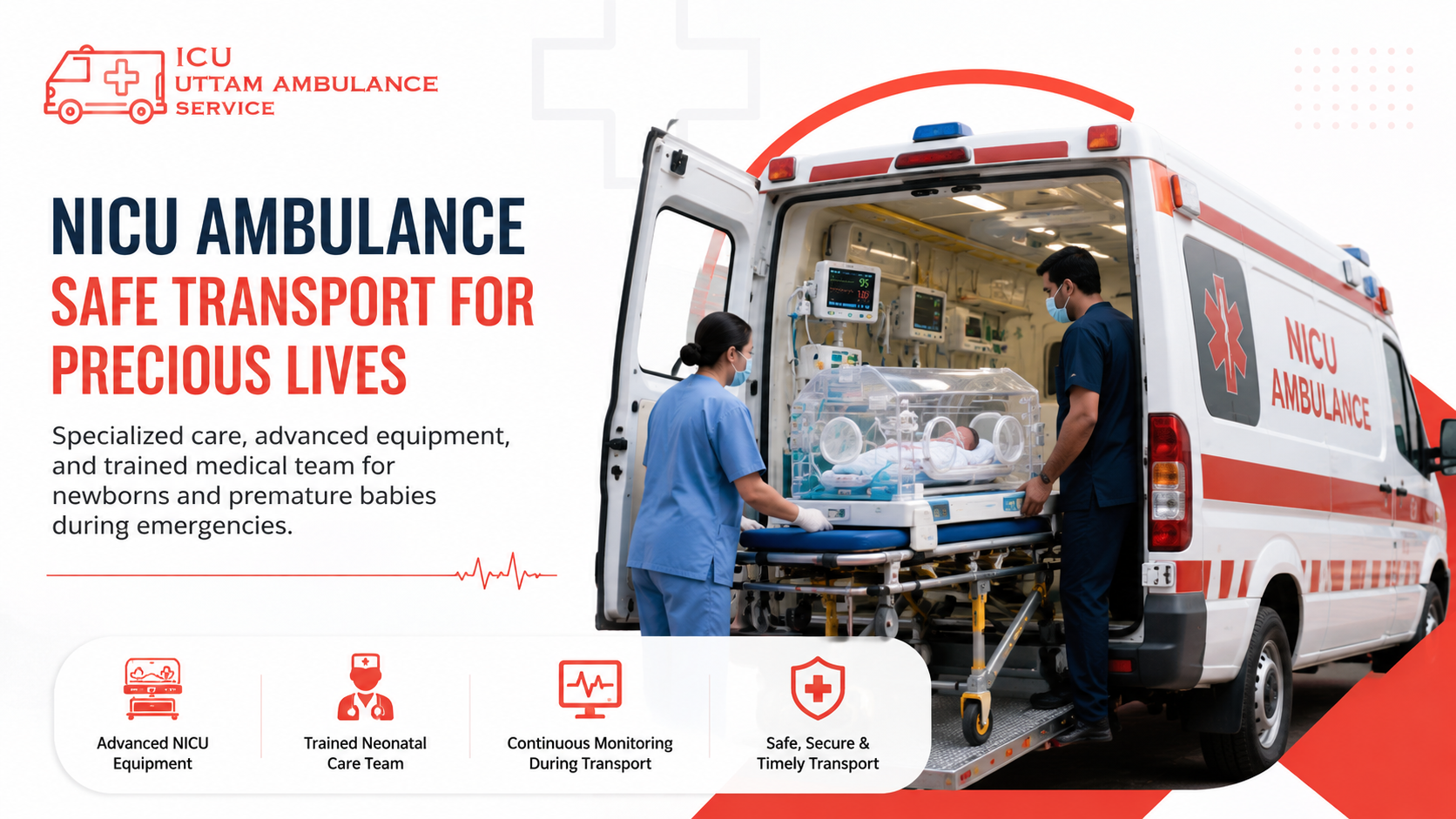
Sign 7: Premature Newborn or Neonatal Emergency
A premature baby or a newborn with breathing problems, jaundice, or infection needs a NICU ambulance — a specialized ICU ambulance for babies. These tiny patients cannot survive transport in a regular ambulance. ICU Uttam Ambulance provides dedicated NICU ambulance services for newborns across West Bengal.
Sign 8: Diabetic Emergency — Very High or Very Low Sugar
Diabetic ketoacidosis (DKA) or severe hypoglycemia can both lead to coma and death if untreated. If the patient is unconscious, confused, or vomiting with extremely high or low blood sugar, IV treatment must begin immediately — something only an ICU ambulance team can provide en route to the hospital.
Sign 9: Poisoning or Drug Overdose
Whether it’s accidental poisoning, medication overdose, or chemical exposure — these patients can deteriorate rapidly. Their airway can get blocked, their heart rhythm can go erratic, and they may need immediate antidotes or intubation. This is a 100% ICU ambulance situation.
Sign 10: Post-Surgery Patient Transfer Requiring ICU-Level Care
If a patient is being transferred from one hospital to another after surgery — especially if they are on a ventilator or have drains and IV lines — they need an ICU ambulance, not a tempo traveler. Any bump in monitoring during transfer can be fatal. Only a fully equipped ICU ambulance can ensure a safe transfer.
Real-Life Example: Why Choosing the Right Ambulance Matters
Imagine a 68-year-old patient in Kolkata suddenly develops severe chest pain, sweating, and breathlessness. Family members often think driving directly to the hospital will save time.
However, if the patient suffers a cardiac arrest on the way, a private vehicle cannot provide oxygen therapy, cardiac monitoring, or life-saving defibrillation.
An ICU ambulance allows treatment to begin immediately while the patient is being transported, helping ensure continuous medical care during a critical emergency.
When Is a Basic Ambulance Sufficient?
While ICU ambulances are essential for critically ill patients, not every medical situation requires intensive care during transport. In many non-emergency cases, a basic ambulance can provide safe and cost-effective patient transportation.
A basic ambulance may be suitable for:
- Routine hospital discharge
- Stable patients requiring non-emergency transfers
- Minor injuries without serious complications
- Scheduled medical appointments or treatments
- Patients who do not require continuous monitoring or advanced life-support equipment
If the patient is conscious, stable, breathing normally, and not at risk of sudden deterioration, a basic ambulance may be the appropriate choice.
If you’re unsure which ambulance type is needed, explain the patient’s condition to the ambulance provider. They can help determine whether a basic ambulance or an ICU ambulance is the safest option.
Frequently Asked Questions (FAQ)
Q1. What situations require an ICU ambulance?
Ans – An ICU ambulance is typically required for patients experiencing heart attacks, strokes, severe breathing difficulties, major accidents, unconsciousness, ventilator dependency, neonatal emergencies, or other life-threatening medical conditions that require continuous monitoring and advanced medical support during transport.
Q2. How is an ICU ambulance different from a regular ambulance?
Ans – A regular ambulance is mainly used for patient transportation and basic medical assistance. An ICU ambulance is equipped with advanced life-support systems such as ventilators, cardiac monitors, defibrillators, oxygen support, and trained medical professionals to provide critical care during transit.
Q3. Should I drive a critical patient to the hospital myself?
Ans – In most serious medical emergencies, self-transport is not recommended. Critical patients may require oxygen support, cardiac monitoring, medication, or emergency interventions while travelling to the hospital. An ICU ambulance can provide immediate medical care during transport.
Q4. Can an ICU ambulance transport patients on ventilator support?
Ans – Yes. ICU ambulances are specifically designed to transport ventilator-dependent patients safely. They are equipped with ventilators, oxygen systems, monitoring equipment, and trained medical staff to manage critical patients throughout the journey.
Q5. When is a basic ambulance sufficient instead of an ICU ambulance?
Ans – A basic ambulance may be suitable for stable patients, routine hospital discharges, scheduled medical appointments, and non-emergency transfers where continuous monitoring or advanced life-support equipment is not required.
Q6. What should I do if I am unsure which ambulance type is needed?
Ans – If you are unsure, contact the ambulance service and explain the patient’s condition, symptoms, and medical history. The provider can help determine whether a basic ambulance or an ICU ambulance is the safest option based on the patient’s needs.
Conclusion:
Here’s the thing about medical emergencies: they rarely announce themselves politely. They strike fast, they escalate faster, and every second you spend wondering “is this serious enough?” is a second that could matter enormously.
If you see even one of the 10 warning signs listed above — pick up the phone. Call for an ICU ambulance. It is always better to call and not need it than to need it and not call.
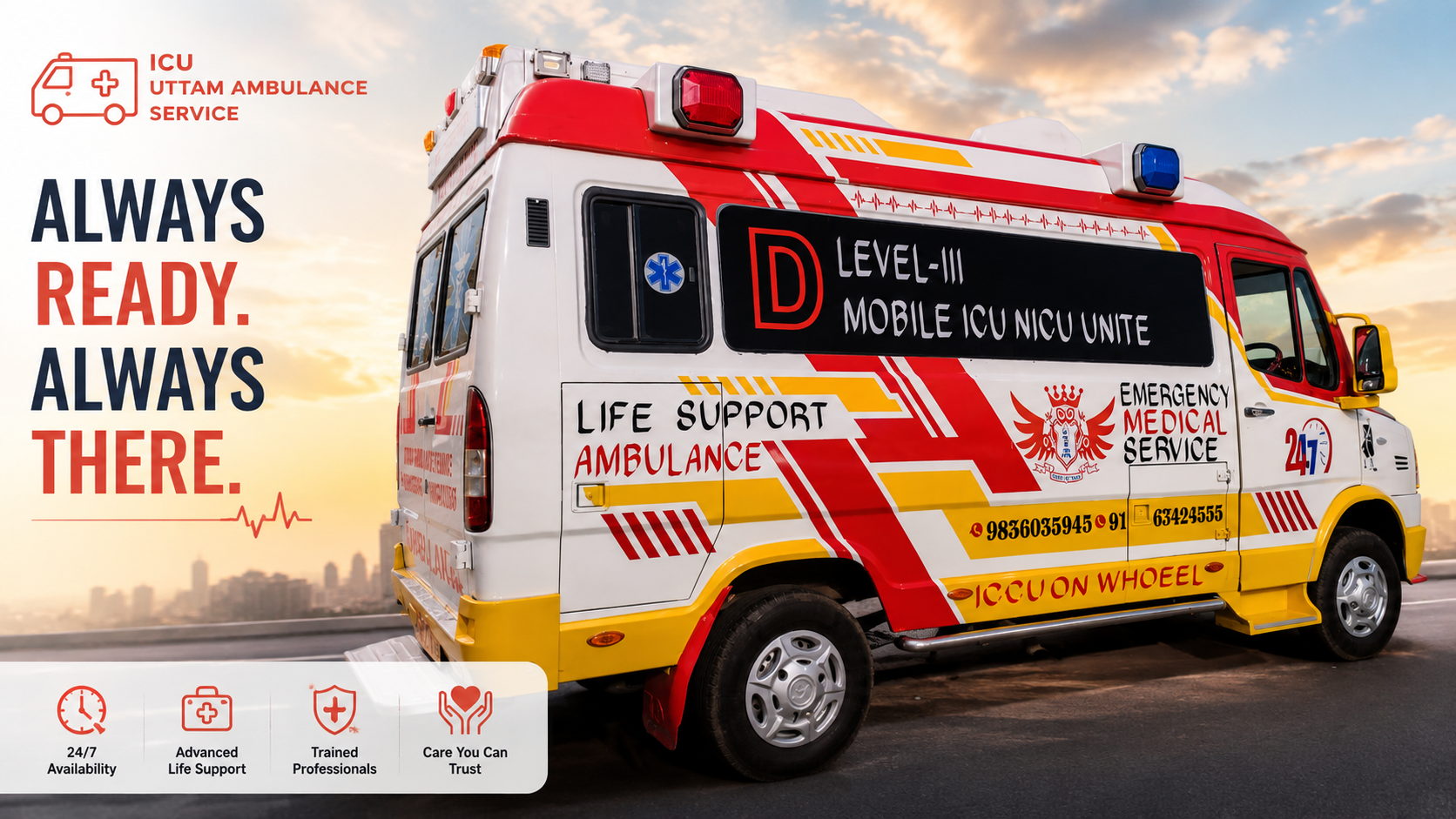
ICU Uttam Ambulance Service has been the trusted partner of thousands of families across West Bengal for over 25 years. Our team is trained, our vehicles are fully equipped, and we are available 24/7 — every single day of the year.
| 🚨 Save This Number Right Now — You Might Need It Someday
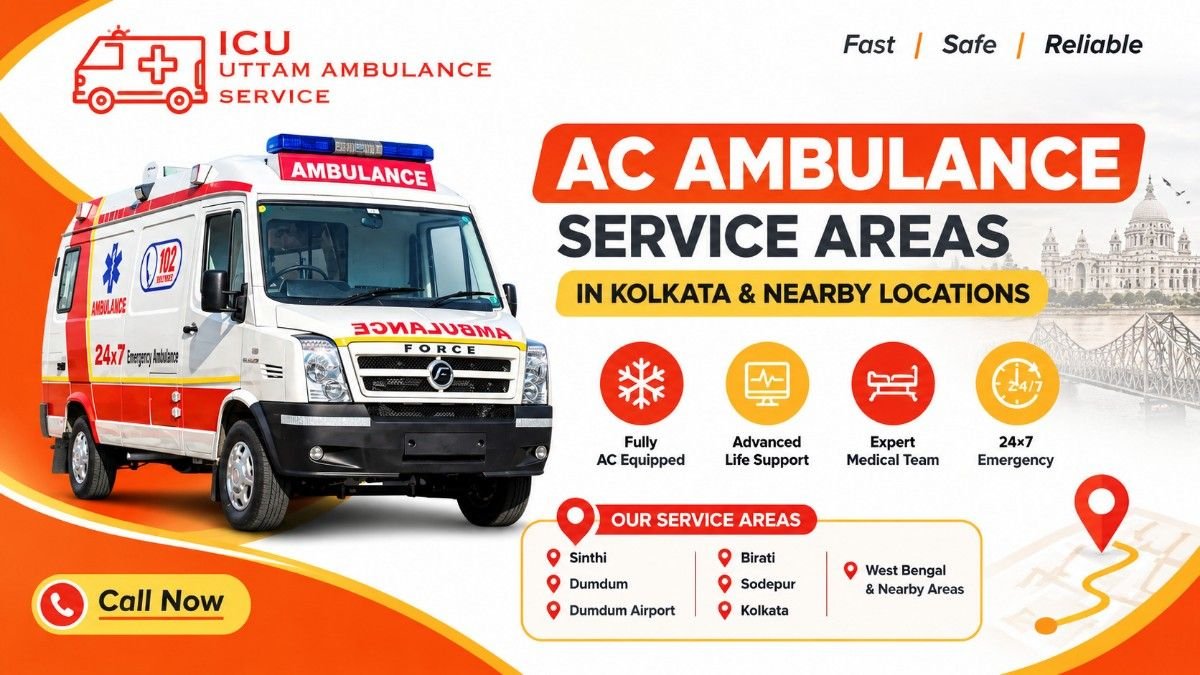
ICU Uttam Ambulance Service 📱 9836035945 | 9163483982 🌐 uttamambulance.in 📍 Serving all of West Bengal | Available 24/7 | 10–15 Min Response |



Leave a Reply